

I. Introduction
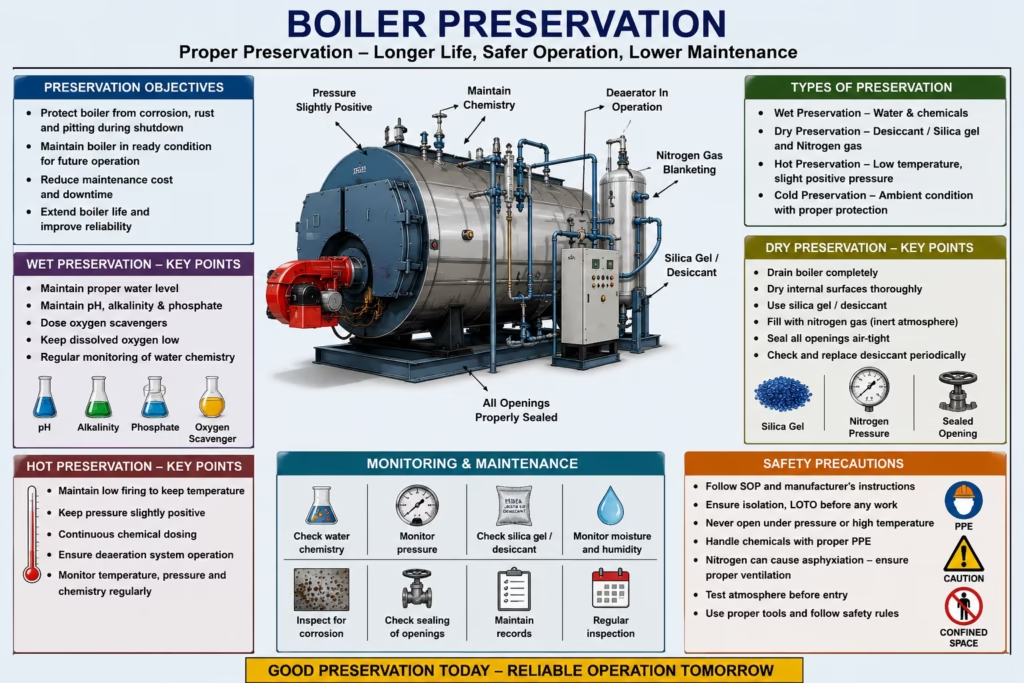
- Definition of Boiler Preservation Procedure
- Boiler Preservation Procedure is a set of preventive measures used to protect internal and external boiler surfaces during idle or shutdown periods.
- It involves chemical treatment, drying, or controlled conditions to prevent deterioration.
- Importance During Shutdown Periods
- Prevents corrosion caused by oxygen, moisture, and contaminants.
- Maintains boiler readiness for quick and safe startup.
- Reduces maintenance costs and unplanned downtime.
- Preserves efficiency and mechanical integrity of boiler components.
- Risks of Improper Preservation
- Corrosion: Oxidation of metal surfaces due to oxygen and water presence.
- Scaling: Deposition of dissolved salts leading to reduced heat transfer.
- Pitting: Localized corrosion causing small holes and structural weakness.
- Tube damage, leakage, and reduced boiler lifespan.
- Scope (Industrial Boilers)
- Applicable to high-pressure boilers (power plants, heavy industries).
- Applicable to medium-pressure boilers (process industries).
- Applicable to low-pressure boilers (heating and small-scale operations).
- Covers both fire-tube and water-tube boilers across various industries.
II. Objectives of Boiler Preservation Procedure
- Prevent internal corrosion and oxidation
- Stops rust formation inside tubes and drum
- Protects metal from damage caused by water and oxygen
- Maintain metal surface passivation
- Keeps a protective layer on metal surfaces
- Reduces chances of chemical reactions and corrosion
- Avoid moisture and oxygen entry
- Keeps air and humidity away from internal parts
- Prevents conditions that lead to rust and pitting
- Ensure quick and safe restart
- Boiler can be started without major cleaning or repairs
- Saves time during plant startup
- Extend boiler life and reliability
- Increases overall equipment lifespan
- Reduces breakdowns and improves performance
- Reduce maintenance and repair costs
- Less damage means fewer repairs
- Helps save operational costs in the long run
III. Types of Boiler Boiler Preservation Procedure Methods
A. Wet Preservation (Short-Term Shutdown)
- Used when the boiler is shut down for a short time (few days to weeks)
- Boiler is completely filled with treated or chemical water
- Chemicals are added to remove oxygen and control pH
- Keeps internal surfaces covered with water to prevent air contact
- Regular checking and chemical dosing are required
B. Dry Preservation (Long-Term Shutdown)
- Used for long shutdown periods (weeks to months)
- Boiler is fully drained and dried from inside
- Moisture is removed using air blowing or heating
- Desiccants like silica gel or quicklime are placed inside
- Boiler is sealed tightly to keep moisture out
C. Hot Preservation
- Boiler is kept warm and under slight pressure
- Low firing is maintained to keep temperature stable
- Chemicals are continuously dosed to control water quality
- Used when boiler is on standby and may be needed anytime
D. Cold Preservation
- Boiler is kept at normal (ambient) temperature
- Internal surfaces are protected using chemicals or nitrogen
- Prevents oxygen and moisture from entering the system
- Commonly used for longer shutdowns when heating is not required
- Each method is selected based on shutdown time and operating conditions
- Proper selection helps protect the boiler and ensures safe future operation
IV. Factors Affecting Selection of Boiler Preservation Procedure
- Duration of shutdown
- Short shutdown → wet preservation is usually better
- Long shutdown → dry preservation is more suitable
- Time period plays a key role in choosing the right method
- Boiler type (fire tube/water tube)
- Different boiler designs need different preservation approaches
- Water tube boilers may require more careful chemical control
- Fire tube boilers are generally easier to preserve
- Ambient environmental conditions (humidity, temperature)
- High humidity increases risk of corrosion
- Hot and moist climates need stronger protection
- Dry climates may allow easier dry preservation
- Availability of chemicals and utilities
- Proper chemicals must be available for wet or cold methods
- Utilities like air supply, nitrogen, or heating may be required
- Limited resources can affect method selection
- Operational requirements
- If boiler is needed anytime → hot preservation is preferred
- For long idle periods → dry or cold preservation is better
- Plant operation plans influence the final decision
- Safety and cost considerations
- Method should be safe for workers and equipment
- Cost-effective solution should be selected without compromising protection
V. Chemicals Used in Boiler Preservation Procedure
- Oxygen scavengers
- Remove dissolved oxygen from water inside the boiler
- Help prevent rust and corrosion
- Common examples: sodium sulfite, hydrazine alternatives
- Alkalinity builders
- Maintain proper pH level in boiler water
- Create an alkaline environment to reduce corrosion
- Examples: sodium hydroxide, trisodium phosphate
- Corrosion inhibitors
- Form a protective layer on metal surfaces
- Reduce direct contact between metal and water/oxygen
- Help in long-term protection during shutdown
- pH control agents
- Keep water chemistry balanced and stable
- Prevent acidic or highly alkaline conditions
- Support overall boiler protection during storage
- Nitrogen gas (dry/cold method)
- Used to fill empty spaces inside the boiler
- Removes oxygen and prevents oxidation
- Creates an inert (non-reactive) environment
- Desiccants (dry preservation method)
- Absorb moisture from inside the boiler
- Keep internal surfaces completely dry
- Common types: silica gel, quicklime
- All these chemicals work together to protect the boiler from corrosion, scaling, and internal damage during shutdown periods
VI. Wet Preservation Procedure (Step-by-Step)
- Drain and flush the boiler (if required)
- Remove old water, sludge, and impurities if the boiler was recently in use
- Ensure internal surfaces are clean before preservation starts
- Fill with demineralized or treated water
- Use high-quality treated water to avoid scaling and deposits
- Fill the boiler carefully to the required level
- Add calculated chemicals
- Add oxygen scavengers and pH control chemicals
- Ensure proper mixing for uniform protection
- Maintain pH and oxygen-free condition
- Keep water chemistry within recommended alkaline range
- Remove dissolved oxygen to prevent corrosion
- Ensure complete filling (no air pockets)
- Fill the boiler fully to avoid trapped air inside
- Air pockets can cause localized corrosion
- Periodic circulation and monitoring
- Circulate water if possible to maintain uniform chemical distribution
- Check water level and chemical balance regularly
- Regular inspection and chemical testing
- Test pH, oxygen level, and chemical concentration
- Inspect for any leakage or abnormal conditions
- Adjust chemicals if required to maintain protection
- Proper wet preservation keeps the boiler safe during short shutdowns and ensures quick restart without damage
VI.Boiler Preservation Procedure (Wet Type) (Step-by-Step with Chemical Details)
- Drain and flush the boiler (if required)
- Remove old water, sludge, and deposits
- Flush with clean DM (demineralized) water if system is contaminated
- Ensures a clean base before chemical filling
- Fill with demineralized or treated water
- Use high-quality DM water to avoid scaling
- Water should be free from salts and impurities
- Helps maintain stable chemistry inside the boiler
- Add calculated preservation chemicals
- Oxygen scavengers: sodium sulfite or hydrazine alternatives
- Remove dissolved oxygen to prevent rusting
- Alkalinity builders: sodium hydroxide or trisodium phosphate
- Maintain pH around alkaline range (usually 10–11)
- Corrosion inhibitors: form protective film on metal surfaces
- Chemicals must be dosed as per boiler volume and standard guidelines
- Oxygen scavengers: sodium sulfite or hydrazine alternatives
- Maintain pH and oxygen-free condition
- Keep water slightly alkaline to stop corrosion
- Regularly check pH levels using testing kits
- Ensure no air enters the system
- Ensure complete filling (no air pockets)
- Fill boiler fully to remove all trapped air
- Air pockets can cause localized corrosion (pitting)
- Proper venting is required during filling
- Periodic circulation and monitoring
- Circulate water occasionally to keep chemicals active
- Check oxygen level, pH, and conductivity regularly
- Adjust chemical dosing if required
- Regular inspection and chemical testing
- Test water chemistry at scheduled intervals
- Inspect for any signs of corrosion or leakage
- Maintain proper log records for monitoring
- This wet preservation method keeps the boiler internally protected and ready for safe restart when needed.
VII. Boiler Preservation Procedure (Dry Type) (Step-by-Step)
- Drain boiler completely
- Remove all water from boiler drum, tubes, and pipelines
- Ensure no stagnant water is left inside
- Open vents and drains for complete removal
- Dry internal surfaces (air blowing or heating)
- Use hot air blowing or dry air to remove moisture
- Heating can also be used to fully dry internal metal surfaces
- Goal is to achieve a completely moisture-free condition
- Use nitrogen gas for protection (important step)
- Fill boiler with nitrogen gas after drying
- Nitrogen removes oxygen and creates an inert atmosphere
- Helps prevent oxidation and rust formation
- Place desiccants inside drum and tubes
- Use moisture-absorbing materials like silica gel or quicklime
- These absorb any remaining humidity inside the boiler
- Place in strategic locations for maximum coverage
- Seal all openings (air-tight condition)
- Close all manholes, valves, vents, and drain points
- Prevent outside air and moisture from entering
- Proper sealing is critical for long-term protection
- Install moisture indicators (if required)
- Use humidity or moisture indicator cards
- Helps monitor internal dryness without opening boiler
- Provides early warning of moisture ingress
- Periodic inspection and maintenance
- Check desiccants regularly for saturation
- Replace silica gel or other drying agents when needed
- Inspect seals and nitrogen pressure if applied
- Ensure boiler remains completely dry and protected
- Dry preservation is highly effective for long shutdown periods and provides strong protection against corrosion when properly maintained.
VIII. Hot Preservation Procedure
Hot preservation is generally used when a boiler is temporarily shut down but may be required again soon. The boiler is kept warm and protected so that restarting can be done more quickly.
- Keep the boiler warm
- Maintain the boiler at a controlled temperature during standby.
- Avoid unnecessary cooling and reheating cycles.
- Follow the boiler manufacturer’s recommended standby temperature.
- Maintain suitable pressure
- Keep the boiler at the required standby pressure or a safe positive pressure, as specified by the operating procedure.
- Positive pressure helps reduce the entry of atmospheric air and oxygen.
- Never exceed the boiler’s approved pressure limits.
- Maintain proper water chemistry
- Keep boiler water within the specified pH, conductivity, and chemical limits.
- Use the plant’s approved water-treatment program.
- Regularly check dissolved oxygen and other important chemistry parameters.
- Use oxygen control
- Oxygen scavengers may be used where permitted by the boiler water-treatment program.
- Common programs can use sodium sulfite for suitable systems; higher-pressure systems often require different treatment chemistry.
- Chemical selection and dosage should always follow the water-treatment specialist’s recommendations.
- Prevent air entry
- Keep the boiler and connected systems properly isolated.
- Check valves, flanges, manholes, vents, and other potential air-entry points.
- Prevent vacuum formation during cooling.
- Maintain circulation when required
- Circulate boiler water periodically or continuously if required by the preservation procedure.
- Circulation helps maintain uniform temperature and chemical concentration.
- Avoid stagnant areas where corrosion could develop.
- Monitor temperature and pressure
- Check temperature, pressure, water level, and chemistry regularly.
- Record readings in a boiler preservation log.
- Investigate abnormal changes immediately.
- Check auxiliary equipment
- Keep required pumps, feedwater systems, instrumentation, and control systems in suitable standby condition.
- Ensure equipment needed for quick restart remains available and operational.
- Inspect for leakage
- Regularly check valves, tubes, flanges, drains, and other connections.
- Any leakage can cause water loss, oxygen entry, or unsafe conditions.
- Prepare for restart
- Before restarting, verify water chemistry, boiler water level, pressure, valves, safety devices, and combustion systems.
- Follow the manufacturer’s startup procedure and plant SOP.
Key Point
Hot preservation is most useful for short-term or intermittent standby, where rapid restart is important. The exact temperature, pressure, and chemical limits should be established from the boiler manufacturer’s instructions and the plant’s approved water-treatment program, rather than using one fixed value for every boiler.
IX. Cold Preservation Procedure
Cold preservation is used when a boiler is shut down and allowed to cool to ambient temperature. The main purpose is to protect internal metal surfaces from corrosion during the shutdown period.
- Allow the boiler to cool safely
- Stop firing and allow the boiler to cool gradually.
- Avoid sudden cooling because it can cause thermal stress.
- Confirm that pressure and temperature have reached safe levels before opening the system.
- Drain the boiler when using dry preservation
- For a dry cold-preservation method, completely drain the boiler.
- Open suitable drains and vents to remove trapped water.
- Make sure low points, headers, drums, and connected piping are free from stagnant water.
- Dry the internal surfaces
- Remove remaining moisture using dry air or controlled heating.
- Moisture must be minimized because it promotes corrosion and pitting.
- Pay particular attention to areas where water can collect.
- Use nitrogen gas where specified
- After drying, nitrogen can be introduced to create an oxygen-deficient atmosphere.
- Maintain the nitrogen blanket according to the approved site procedure.
- Monitor nitrogen pressure and check for leakage.
- Nitrogen can cause asphyxiation, so enclosed areas must be properly controlled and tested before entry.
- Use silica gel or other desiccants
- Place silica gel or an approved desiccant in suitable locations inside the boiler.
- Desiccants absorb residual moisture from the internal atmosphere.
- Check the desiccant periodically and replace or regenerate it when saturated.
- Seal the boiler properly
- Close and seal manholes, vents, drains, valves, and other openings as required.
- Good sealing prevents humid atmospheric air from entering.
- Check seals periodically for leakage.
- Maintain a dry internal environment
- Keep internal humidity as low as practical.
- Use moisture or humidity indicators where appropriate.
- Prevent rainwater and humid air from entering through connected systems.
- Regular inspection and monitoring
- Check nitrogen pressure, if used.
- Inspect silica gel and moisture indicators.
- Check for condensation, leakage, and signs of corrosion.
- Maintain a preservation log for all inspections and corrective actions.
- Before returning the boiler to service
- Remove desiccants and temporary preservation equipment.
- Vent nitrogen safely and confirm the atmosphere is safe.
- Inspect the boiler internally where required.
- Complete necessary water filling, chemical treatment, testing, and startup preparations according to the plant SOP.
Key point: Cold preservation can use either a dry method with silica gel/desiccants or an inert-gas method using nitrogen. The selected method should depend on shutdown duration, boiler design, climate, and the manufacturer’s preservation requirements.
X. Monitoring and Maintenance During Preservation
Regular monitoring is important because preservation only works properly when the boiler’s condition is checked throughout the shutdown period.
- Check water chemistry
- For wet preservation, regularly test boiler water quality.
- Monitor pH, conductivity, dissolved oxygen, and chemical concentration as applicable.
- Keep all parameters within the limits specified by the plant water-treatment program.
- Monitor chemical levels
- Check oxygen scavenger and alkalinity levels regularly.
- Add chemicals only according to test results and the approved treatment program.
- Avoid excessive chemical dosing because it can create other water-chemistry problems.
- Monitor nitrogen pressure
- For nitrogen-preserved boilers, regularly check the nitrogen pressure.
- Look for pressure loss that may indicate leakage.
- Maintain the required positive pressure according to the preservation procedure.
- Check silica gel and desiccants
- Inspect silica gel or other desiccants during dry preservation.
- Replace or regenerate them when they become saturated.
- Keep sufficient desiccant available for continuous moisture control.
- Check moisture and humidity
- Monitor humidity inside the boiler where indicators or instruments are installed.
- Look for condensation or signs of moisture entry.
- Take corrective action if moisture levels increase.
- Inspect for corrosion
- Check accessible internal and external surfaces for rust, pitting, discoloration, or deposits.
- Pay special attention to drums, headers, tubes, valves, and low points.
- Record any abnormal condition for corrective action.
- Check boiler sealing
- Inspect manholes, valves, vents, drains, flanges, and temporary covers.
- Make sure unwanted air and moisture cannot enter the boiler.
- Repair damaged seals immediately.
- Monitor temperature and pressure
- During hot preservation, regularly record boiler temperature and pressure.
- Make sure both remain within the approved standby limits.
- Investigate sudden changes promptly.
- Inspect auxiliary systems
- Check pumps, deaerator, chemical dosing equipment, instrumentation, and other preservation-related equipment.
- Ensure required systems remain available for safe preservation and restart.
- Maintain proper documentation
- Keep a boiler preservation log.
- Record inspection dates, chemical test results, nitrogen pressure, moisture readings, and corrective actions.
- Good records make future inspections and restart planning easier.
- Periodic internal inspection
- Conduct internal inspection according to the plant maintenance schedule and applicable boiler requirements.
- Never enter a boiler without proper isolation, draining, ventilation, gas testing, confined-space controls, and an approved entry procedure.
Key Point
Regular monitoring is the heart of successful boiler preservation. A boiler should not simply be shut down and left unattended; its water chemistry, moisture condition, pressure, sealing, and physical condition should be checked throughout the preservation period.
XI. Safety Precautions During Boiler Preservation
Boiler preservation involves pressure, hot surfaces, chemicals, nitrogen, confined spaces, and stored energy. Proper safety controls are therefore essential throughout the preservation period.
- Follow the approved SOP
- Always follow the plant’s approved boiler preservation procedure.
- Use the boiler manufacturer’s instructions and site safety requirements.
- Only trained and authorized personnel should perform preservation work.
- Proper isolation of the boiler
- Isolate the boiler from steam, water, fuel, electrical, and other energy sources as required.
- Apply Lockout/Tagout (LOTO) before maintenance or internal work.
- Verify zero energy and zero pressure before opening equipment.
- Control pressure and temperature
- Never open manholes, valves, or inspection covers while the boiler is under pressure.
- Confirm that pressure and temperature are at safe levels before draining or opening.
- Do not bypass or disable safety valves and protective devices.
- Chemical handling safety
- Wear appropriate PPE such as chemical-resistant gloves, goggles/face shield, protective clothing, and safety footwear.
- Follow the Safety Data Sheet (SDS) for every chemical.
- Add chemicals using the approved dosing method and avoid direct skin or eye contact.
- Safe handling of oxygen scavengers and alkaline chemicals
- Handle sodium sulfite, caustic chemicals, phosphates, and other treatment chemicals carefully.
- Store chemicals in properly labeled containers.
- Never mix chemicals unless their compatibility has been confirmed by the responsible water-treatment specialist.
- Nitrogen safety
- Nitrogen is not toxic, but it can displace oxygen and cause rapid asphyxiation.
- Keep nitrogen discharge areas properly ventilated.
- Use oxygen monitoring where required.
- Never enter a nitrogen-filled boiler or vessel without complete gas freeing and an approved confined-space entry procedure.
- Confined-space precautions
- Boiler drums, furnaces, and some internal areas may be classified as confined spaces.
- Entry requires an approved permit, atmospheric testing, ventilation, isolation, communication, and rescue arrangements.
- Test for oxygen deficiency and hazardous gases before and during entry as required.
- Prevent moisture and slip hazards
- Clean up water and chemical spills immediately.
- Keep platforms, ladders, and access areas dry and clear.
- Use suitable lighting when inspecting internal areas.
- Use proper ventilation
- Provide adequate ventilation when handling chemicals or using nitrogen.
- Do not work in areas where chemical vapors or oxygen-deficient atmospheres may accumulate.
- Protect against unexpected boiler startup
- Clearly identify the boiler as “Under Preservation – Do Not Operate” where appropriate.
- Isolate automatic startup systems.
- Communicate the preservation status to operations, maintenance, and other relevant teams.
- Regular inspection
- Check pressure, temperature, water chemistry, nitrogen pressure, seals, and desiccants according to the preservation plan.
- Report leaks, corrosion, abnormal pressure changes, or other unsafe conditions immediately.
- Emergency preparedness
- Keep emergency showers, eyewash stations, spill-control materials, fire protection, and first-aid equipment available where required.
- Personnel should know the emergency response procedure before starting preservation activities.
Key Safety Point
Never compromise safety for faster preservation or restart. Before opening, entering, draining, chemical dosing, or introducing nitrogen, confirm isolation, pressure status, atmospheric conditions, and the required permit and PPE.
XII. Common Mistakes to Avoid During Boiler Preservation
Proper preservation can significantly reduce corrosion and maintenance problems, but small mistakes can reduce its effectiveness. The following common errors should be avoided:
- Leaving water inside during dry preservation
- Trapped water can cause rust and pitting.
- Completely drain low points, tubes, headers, and other water-holding areas.
- Incomplete drying
- Even a small amount of moisture can promote corrosion.
- Use dry air, controlled heating, or an approved drying procedure before sealing.
- Incorrect chemical dosing
- Too little chemical may not provide adequate protection.
- Excessive dosing can create water-chemistry problems.
- Base chemical addition on water analysis and the approved treatment program.
- Ignoring dissolved oxygen
- Oxygen is one of the major causes of internal boiler corrosion.
- Regularly monitor dissolved oxygen where applicable.
- Maintain effective deaeration or oxygen-control measures.
- Poor boiler sealing
- Open or leaking valves, vents, drains, and manholes can allow humid air to enter.
- Check all sealing points regularly.
- Not checking nitrogen pressure
- Inert-gas preservation can become ineffective if nitrogen leaks out.
- Monitor pressure and investigate unexplained pressure loss.
- Using saturated silica gel
- Saturated desiccant cannot effectively absorb additional moisture.
- Inspect silica gel regularly and replace or regenerate it when required.
- Ignoring environmental conditions
- High humidity, rain, temperature changes, and coastal environments can increase corrosion risk.
- Increase inspection frequency when environmental conditions are severe.
- No regular monitoring
- A boiler should not simply be preserved and forgotten.
- Regularly check water chemistry, moisture, pressure, temperature, and physical condition.
- Poor documentation
- Failure to record chemical tests and inspections makes it difficult to identify problems.
- Maintain a preservation log with dates, readings, chemical additions, and corrective actions.
- Opening the boiler without proper safety controls
- Never open or enter equipment without confirming isolation, zero pressure, and safe atmospheric conditions.
- Follow LOTO and confined-space requirements where applicable.
- Using one preservation method for every boiler
- Boiler design, pressure, shutdown duration, water chemistry, and climate all affect method selection.
- Select the preservation method based on the specific boiler and manufacturer/site requirements.
Key Point
The most common preservation failures come from moisture, oxygen, incorrect chemical control, poor sealing, and inadequate monitoring. A simple checklist and regular inspection schedule can prevent many of these problems.