
OSHA Safety Management System
What is an OSHA (SMS) Safety Management System?
An OSHA Safety Management System (SMS) is a structured approach used to identify hazards, assess and control risks, protect workers, comply with safety requirements, and continuously improve workplace safety performance.
OSHA does not prescribe one universal “OSHA Safety Management System” containing a single official number of elements. Instead, OSHA’s recommended safety and health program framework is commonly organized around seven core elements.
OSHA Recommended Safety & Health Program — 7 Core Elements
| No. | OSHA Element | Main Purpose |
|---|---|---|
| 1 | Management Leadership | Management demonstrates commitment, provides resources, and establishes safety responsibilities. |
| 2 | Worker Participation | Employees participate in hazard identification, inspections, investigations, and safety improvements. |
| 3 | Hazard Identification and Assessment | Identify workplace hazards and evaluate the risks associated with them. |
| 4 | Hazard Prevention and Control | Eliminate hazards or control them using the hierarchy of controls. |
| 5 | Education and Training | Provide workers and supervisors with appropriate safety training and competency development. |
| 6 | Program Evaluation and Improvement | Measure safety performance, audit the system, investigate failures, and continually improve. |
| 7 | Communication and Coordination for Host Employers, Contractors, and Staffing Agencies | Ensure safety information and responsibilities are effectively communicated among employers, contractors, and workers. |
1. Management Leadership Management
- Management should Establish a Clear safety policy
- Assign Responsibilities
- Provide Adequate Resources
- Set Measurable Objectives
- Demonstrate visible commitment to safety
2. Worker Participation
- Workers should have an active role in the SMS. This includes:
- Reporting hazards and near misses
- Participating in safety committees
- Conducting workplace inspections
- Taking part in incident investigations
- Suggesting corrective actions
- Participating in risk assessments
3. Hazard Identification and Assessment
Organizations should systematically identify hazards, including:
- Mechanical hazards
- Electrical hazards
- Chemical hazards
- Fire and explosion hazards
- Pressure-system hazards
- Ergonomic hazards
- Confined-space hazards
- Environmental hazards
- Risk is then evaluated based on likelihood and severity.
4. Hazard Prevention and Control
Controls should preferably follow the Hierarchy of Controls
- Elimination → Substitution → Engineering Controls → Administrative Controls → PPE
- For example, eliminating a hazardous chemical is generally more effective than relying only on PPE.
5. Education and Training
Employees must receive training appropriate to their work and hazards. Training may cover:
- PPE
- Lockout/Tagout
- Confined Space
- Hot Work
- Fire Safety
- Chemical Safety
- Machine Safety
- Emergency Response
- Fall Protection
- Electrical Safety
6. Program Evaluation and Improvement
The organization should periodically evaluate whether its safety program is working. Typical methods include:
- Safety audits
- Workplace inspections
- Incident/near-miss analysis
- Corrective-action tracking
- Safety KPIs
- Management reviews
- Trend analysis
7. Communication and Coordination
This is particularly important in industrial facilities where contractors, subcontractors, temporary workers, and host employers work together.
The parties should communicate:
- Site hazards
- Emergency procedures
- Permit requirements
- PPE requirements
- Safe work procedures
- Responsibilities
- Incident-reporting requirements
OSHA SMS vs. OSHA PSM
These two concepts are often confused:
- OSHA Safety & Health Program (SMS) → broad workplace safety management covering hazards and worker protection.
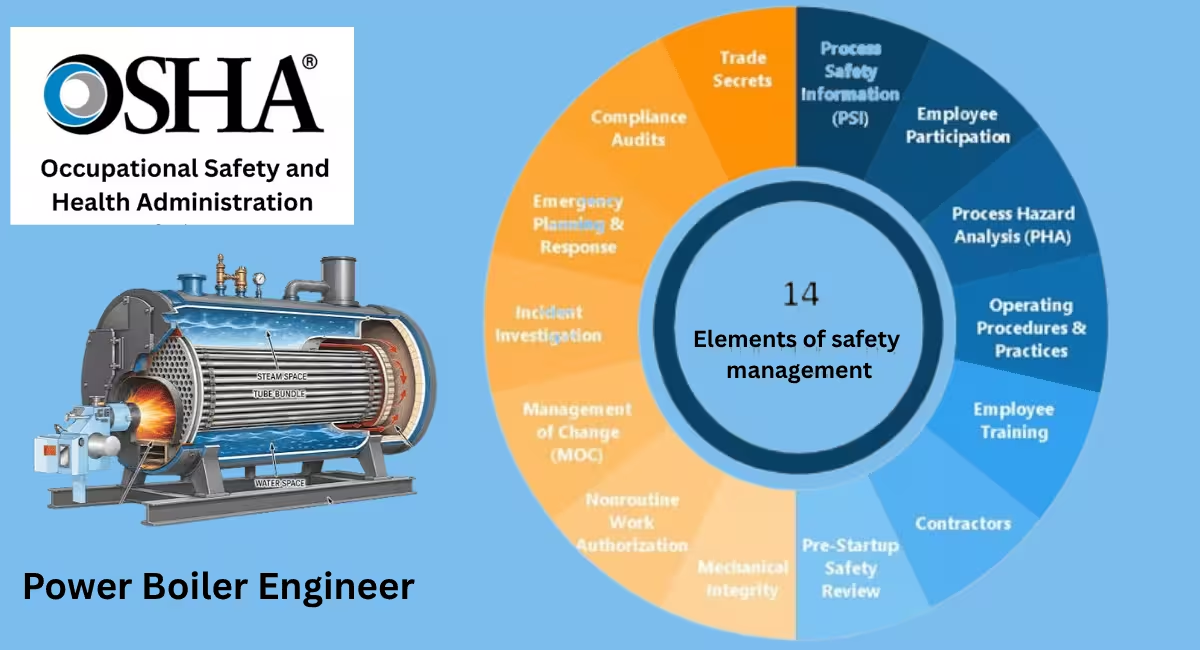
- OSHA Process Safety Management (PSM) → a specific program for preventing catastrophic releases of highly hazardous chemicals. OSHA's PSM standard, 29 CFR 1910.119, contains 14 management-system elements.
- If you are working specifically with process plants, boilers, power plants, chemical plants, refineries, or sugar mills, the 14 OSHA PSM elements may be the list you are looking for.
14 OSHA PSM Elements
- Employee Participation
- Process Safety Information (PSI)
- Process Hazard Analysis (PHA)
- Operating Procedures
- Training
- Contractors
- Pre-Startup Safety Review (PSSR)
- Mechanical Integrity
- Hot Work Permit
- Management of Change (MOC)
- 11 Incident Investigation
- 12 Emergency Planning and Response
- 13 Compliance Audits
- 14 Trade Secrets
1. Employee Participation
OSHA reference: 29 CFR 1910.119(c)
Employee participation means involving workers who operate, maintain, inspect, and work around the process in the development and implementation of the PSM program.
Main requirements
Employees should have opportunities to participate in:
- Process Hazard Analysis (PHA)
- PHA updates and revalidations
- Operating procedure development
- Safety reviews
- Incident investigations
- Management of Change (MOC)
- Emergency planning
- Mechanical-integrity activities
- Safety audits
- Hazard reporting
Why it is important
Operators and maintenance personnel often have practical knowledge of process conditions and equipment that may not be apparent from engineering documents.
Example
A boiler operator may notice repeated pressure fluctuations or unusual burner behavior. Reporting this information can help identify a developing process-safety problem before it results in an incident.
2. Process Safety Information (PSI)
OSHA reference: 29 CFR 1910.119(d)
Process Safety Information provides the technical foundation required to understand the hazards of the process and equipment.
PSI should be available before conducting the Process Hazard Analysis.
PSI generally covers three major areas:
A. Information about highly hazardous chemicals
Examples include:
*Toxicity* Permissible exposure limits* Physical properties* Chemical reactivity* Thermal and chemical stability* Hazardous effects of mixing incompatible materials
B. Process technology information
This may include:
*Block flow diagrams* Process flow diagrams* Process chemistry* Maximum intended inventory* Safe upper and lower operating limits* Consequences of deviation from operating limits* Material and energy balances* Safety systems
C. Equipment information
Examples include:
*Piping and Instrumentation Diagrams (P&IDs)* Equipment specifications* Electrical classification* Relief-system design* Ventilation systems* Design codes and standards* Material of construction* Design pressure and temperature* Safety instrumented systems* Pressure vessels and piping information
Example
For a steam boiler system, important information can include:
Design pressure* Design temperature* MAWP* Boiler materials* Safety-valve settings* Burner/fuel system* Interlocks* Feedwater system* Combustion controls* Emergency shutdown systems.
3. Process Hazard Analysis (PHA)
OSHA reference: 29 CFR 1910.119(e)
PHA is one of the most important elements of PSM.
Its purpose is to identify process hazards, evaluate consequences, determine safeguards, and recommend risk-reduction measures.
Common PHA methods
*What-If Analysis* Checklist* What-If/Checklist* HAZOP — Hazard and Operability Study* FMEA — Failure Mode and Effects Analysis* Fault Tree Analysis* Appropriate equivalent methodologies
PHA should consider
*Previous incidents* Engineering and administrative controls* Facility siting* Human factors* Consequences of control-system failures* Safety and health effects* Previous PHA recommendations
Example
A HAZOP for a fuel-gas-fired boiler might examine
Deviation: High fuel-gas pressure
Possible causes:
*Pressure regulator failure* Control-valve malfunction* Incorrect set point
Consequences:
*Excess firing* Flame instability* Furnace overpressure* Fire or explosion
Safeguards:
Pressure control* High-pressure trip* Burner management system* Emergency shutdown valve* Pressure relief/protection systems
PHA recommendation
If existing safeguards are inadequate, a recommendation may be generated, assigned to a responsible person, given a target completion date, and tracked to closure.
Possible causes:
4. Operating Procedures
OSHA reference: 29 CFR 1910.119(f)
Written operating procedures provide workers with clear instructions for safely operating the process.
Procedures should address operating phases such as:
Initial startup
Instructions should explain how equipment is prepared and safely started.
Normal operation
Operators should understand:
Normal operating parameters
Control-system requirements
Monitoring requirements
Alarm response
Safe operating limits
Normal operation
Operators should understand:
*Normal operating parameters*
Control-system requirements*
Monitoring requirements*
Alarm response*
Safe operating limits
Emergency shutdown
Operators need clear instructions for safely shutting down the process during an emergency.
Emergency operations
Procedures should explain how workers respond to abnormal or emergency conditions.
Normal shutdown
The procedure should explain how to safely bring the process offline.
Startup after turnaround or emergency shutdown
Special precautions may be required before restarting.
Example
A boiler operating procedure might include:
Pre-start checks → Furnace purge → Fuel-system checks → Ignition → Flame verification → Load increase → Normal operation → Shutdown → Emergency shutdown.
Operating procedures should be reviewed periodically and whenever changes are made to the process.
5. Training
OSHA reference: 29 CFR 1910.119(g)
Employees involved in operating a covered process must receive appropriate training.
Training should ensure that workers understand:
*Process hazards*
Operating procedures*
Safe work practices*
Emergency procedures*
Equipment operation*
Safety systems*
Consequences of deviations*
Relevant PSM requirements*
Training categories
Training can include:
*Initial training*
Refresher training*
Job-specific training*
Emergency-response training*
Contractor awareness*
Maintenance training*
Control-room training
Example
A boiler operator may need training in:
*Burner Management System*
Boiler startup/shutdown*
Flame failure*
Low-low drum-level trip*
High steam pressure*
Fuel-gas emergency isolation*
Furnace purge*
Emergency shutdown*
PPE*
Permit-to-work requirements*
Training should be documented.
6. Contractors
OSHA reference: 29 CFR 1910.119(h)
Contractor management is important because contractors may perform maintenance, construction, inspection, cleaning, turnaround, or other work in hazardous process areas.
The host employer must evaluate contractor safety performance and practices.
Contractor management should address
*Contractor selection* Safety performance* Site-specific hazards* Site safety rules* Emergency procedures* PPE* Permit-to-work system* Hazard communication* Incident reporting* Contractor training* Safe work practices
Contractors should be informed about
*Process hazards* Chemical hazards* Fire/explosion hazards* Restricted areas* Emergency alarms* Evacuation routes* Lockout/Tagout requirements* Hot-work requirements
Example
Before a contractor performs welding near a fuel system, the facility should ensure that the contractor understands the hot-work permit, isolation, gas testing, fire-watch, and emergency requirements.
7. Pre-Startup Safety Review (PSSR)
OSHA reference: 29 CFR 1910.119(i)
A Pre-Startup Safety Review is performed before introducing highly hazardous chemicals into a new or significantly modified process.
The purpose is to verify that the process is ready to operate safely.
PSSR should verify
*Equipment is installed according to design* Construction is complete* Safety systems are operational* Operating procedures are available* Required training has been completed* PHA recommendations have been addressed or resolved as required* MOC requirements have been completed* Emergency systems are ready
Example
Before commissioning a new boiler fuel-gas system, the PSSR team may verify:
*P&IDs are updated*
Pressure testing is complete*
Gas detectors are operational*
Emergency shutdown valves function*
Burner management system is tested*
Interlocks are tested*
Operating procedures are approved*
Operators are trained*
Required permits and documentation are complete
PSSR is essentially the final safety gate before startup.
8. Mechanical Integrity
OSHA reference: 29 CFR 1910.119(j)
Mechanical Integrity ensures that critical process equipment remains designed, installed, maintained, inspected, and tested in a safe condition.
This is especially important for pressure equipment and safety-critical systems.
Equipment covered can include
*Pressure vessels* Storage tanks* Piping systems* Relief and vent systems* Emergency shutdown systems* Safety-critical controls* Pumps* Compressors* Instrumentation* Fire-protection systems
Mechanical-integrity activities
*Inspection* Testing* Preventive maintenance* Calibration* Thickness measurement* Corrosion monitoring* Vibration monitoring* Relief-valve testing* Functional testing* Documentation
Example
For a boiler, mechanical-integrity activities can include:
*Boiler pressure-part inspection*
Tube thickness inspection*
Drum inspection
Safety-valve testing
Burner inspection
Flame scanner testing
Low-water-level trip testing
Pressure-transmitter calibration
Feedwater-system inspection
Critical principle
Inspection and testing should be performed at frequencies consistent with manufacturer recommendations, engineering practices, applicable codes/standards, and the facility's established procedures.
9. Hot Work Permit
OSHA reference: 29 CFR 1910.119(k)
A hot-work permit is required for applicable hot-work operations conducted on or near a covered process.
Hot work includes activities such as
*Welding* Cutting* Brazing* Grinding that can generate ignition sources* Other spark/flame-producing operations
Permit controls may include
*Identification of work location* Hazard assessment* Equipment isolation* Gas testing* Removal of combustible materials* Fire extinguishers* Fire watch* Atmospheric monitoring* Authorization* Permit validity period*
Example
Before welding on piping that previously contained flammable material:
Isolate → depressurize → drain → purge/clean → gas test → issue permit → establish fire watch → perform work → inspect area after completion.
The exact isolation and atmospheric-testing requirements depend on the process and site procedure.
10. Management of Change (MOC)
OSHA reference: 29 CFR 1910.119(l)
Management of Change controls modifications to a covered process so that unintended hazards are not introduced.
MOC is required for certain changes to:
*Process technology*
Chemicals*
Equipment*
Instrumentation*
Procedures*
Operating conditions*
Facilities*
MOC should evaluate
*What is changing?* Why is it changing?* What hazards could the change introduce? What safety controls are required?* Does the change require PHA review?* Are procedures affected?* Is training required?* Are drawings/documentation affected?* Is a PSSR required?
Example
Changing a boiler's fuel from natural gas to a different fuel may require evaluation of:
*Burner capacity*
Combustion characteristics*
Fuel pressure
Emissions
Flame stability
Furnace conditions
Control logic
Trips/interlocks
Piping
Operating procedures
A change should not simply be implemented because it appears technically straightforward.
11. Incident Investigation
OSHA reference: 29 CFR 1910.119(m)
The purpose of incident investigation is to determine what happened, why it happened, and what actions are necessary to prevent recurrence.
Investigations should be initiated promptly after an incident that resulted in, or could reasonably have resulted in, a catastrophic release.
Investigation should determine
*What happened?* Where did it happen?* When did it happen?* What equipment was involved?* What operating conditions existed?* What human factors contributed?* What procedural weaknesses existed?* Were alarms or interlocks functioning?* Were previous warnings ignored?* Were maintenance deficiencies involved?* What corrective actions are required?*
Root-cause analysis
The investigation should look beyond immediate causes.
For example:
Tube failure → overheating → low flow → inadequate monitoring → inadequate procedure → organizational/system weakness.
Corrective actions
Actions should be:
*Specific*
Assigned to responsible persons*
Given target dates*
Tracked*
Verified for completion*
12. Emergency Planning and Response
OSHA reference: 29 CFR 1910.119(n)
Facilities must establish and implement an emergency action plan for the covered process.
The plan should address credible emergency scenarios.
Emergency situations may include
*Fire* Explosion* Toxic release* Chemical release* Fuel-gas leak* Major equipment failure* Loss of containment* Utility failure* Boiler emergency* Natural disaster*
Emergency planning may include
*Alarm systems* Emergency shutdown* Evacuation* Muster points* Emergency communication* Fire protection* First aid* Emergency response teams* Coordination with external emergency services* Rescue procedures*
Example: Boiler emergency
A serious boiler emergency might require:
Alarm → fuel isolation → emergency shutdown → evacuation/response according to site procedure → notify responsible personnel → control the hazard → investigate before restart.
Emergency procedures should be periodically reviewed and practiced as appropriate.
13. Compliance Audits
OSHA reference: 29 CFR 1910.119(o)
Compliance audits determine whether the facility is following its PSM program and the requirements of the OSHA standard.
The employer must certify that the compliance audit has been conducted.
Audit areas may include
*Employee participation* PSI* PHA* Operating procedures* Training* Contractor management* PSSR* Mechanical integrity* Hot-work permits* MOC* Incident investigations* Emergency planning* Trade secrets*
Audit process
Plan → Review documents → Interview employees → Inspect field conditions → Identify deficiencies → Develop corrective actions → Track closure → Verify effectiveness.
Compliance audits should be performed at least every three years, unless a different interval is required by the applicable requirement.
14. Trade Secrets
OSHA reference: 29 CFR 1910.119(p)
Trade-secret provisions address situations where confidential information is necessary for employees or representatives to perform their safety-related responsibilities.
An employer may protect legitimate trade-secret information, but this provision does not eliminate employees' rights to obtain necessary safety information under the conditions established by the standard.
Information may involve
*Chemical identity* Process technology* Formulations* Manufacturing processes* Proprietary operating information*
Safety principle
Confidentiality should not prevent appropriate personnel from obtaining information necessary to:
*Conduct a PHA*
Perform an incident investigation*
Respond to an emergency*
Carry out safety responsibilities*
Important: OSHA’s general safety and health program framework has 7 core elements, while OSHA PSM has 14 elements. They should not be presented as the same standard.
Summary of the 14 OSHA PSM Elements
N0
- 1
- 2
- 3
- 4
- 5
- 6
- 7
- 8
- 9
- 10
- 11
- 12
- 13
- 14
PSM ELEMENTS
- Employee Participation
- Process Safety Information
- Process Hazard Analysis
- Operating Procedures
- Training
- Contractors
- Pre-Startup Safety Review
- Mechanical Integrity
- Hot Work Permit
- Management of Change
- Incident Investigation
- Emergency Planning & Response
- Compliance Audits
- Trade Secrets
Primary Objective
- Involve employees in process safety
- Establish technical knowledge of the process
- Identify and evaluate process hazards
- Establish safe operating instructions
- Ensure personnel are competent
- Control contractor-related process-safety risks
- Verify safety before startup
- Maintain critical equipment in safe condition
- Control ignition hazards
- Safely manage process changes
- Identify causes and prevent recurrence
- Prepare for and respond to emergencies
- Verify PSM implementation
- Manage confidential process information while maintaining safety access
Simple OSHA PSM Flow
Employee Participation
↓
Process Safety Information
↓
Process Hazard Analysis
↓
Operating Procedures + Training
↓
Contractor Management
↓
PSSR
↓
Mechanical Integrity
↓
Hot Work / MOC Controls
↓
Incident Investigation
↓
Emergency Planning
↓
Compliance Audit
↓
Continuous Improvement
Important distinction
If you are preparing this for Power Boiler Engineering / an industrial safety manual, I can also structure the 14 elements into a professional OSHA PSM manual with: Purpose → Scope → Responsibilities → Procedure → Checklist → Records → KPIs → Audit questions for each of the 14 elements.