

1. Introduction
Boiler Passivation is a controlled chemical process used in industrial and boiler systems to form a stable, protective oxide layer on metal surfaces, primarily carbon steel and stainless steel. This layer reduces the metal’s reactivity with water, oxygen, and contaminants, thereby minimizing the risk of corrosion during operation.
Boiler Passivation is required before commissioning or during lay-up to protect newly installed or cleaned equipment from rapid oxidation and corrosion. During these periods, metal surfaces are highly active and vulnerable. Proper passivation ensures long-term equipment integrity, improves reliability, and supports safe, efficient start-up and shutdown of boiler and auxiliary systems.
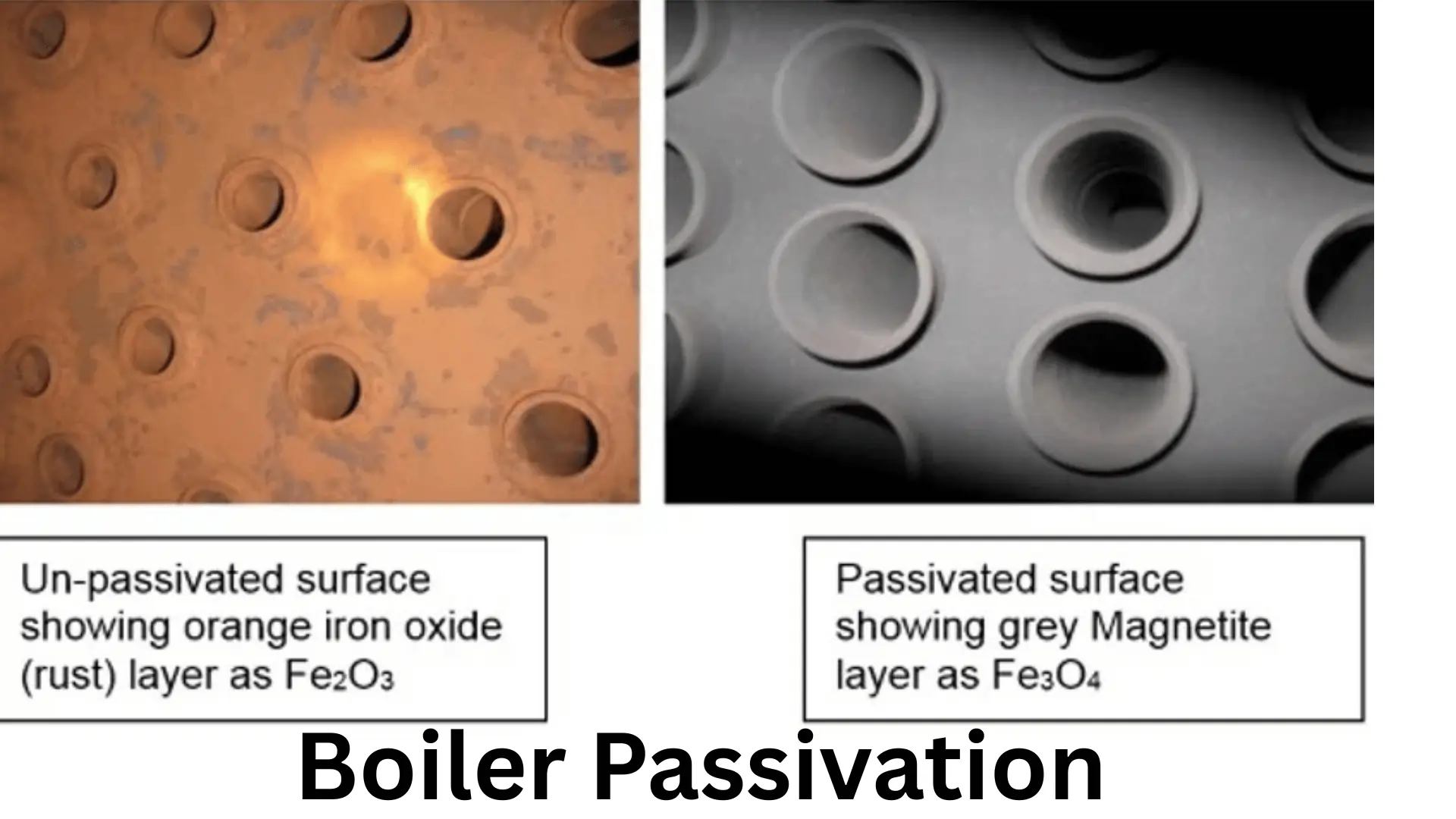
2. What Is Boiler Passivation?
Boiler passivation is a controlled chemical treatment process that creates a thin, stable protective oxide layer (magnetite, Fe₃O₄) on the internal metal surfaces of a boiler.
This process reduces the metal’s reactivity with water, oxygen, and impurities, thereby preventing corrosion, pitting, and rust formation.
Passivation is typically carried out:
- After new boiler installation
- After chemical cleaning or major maintenance
- Before commissioning or during lay-up
Its primary objective is to protect boiler internals, improve reliability, and ensure long-term safe and efficient operation.
3. Benefits of Boiler Passivation (Boiler Systems)
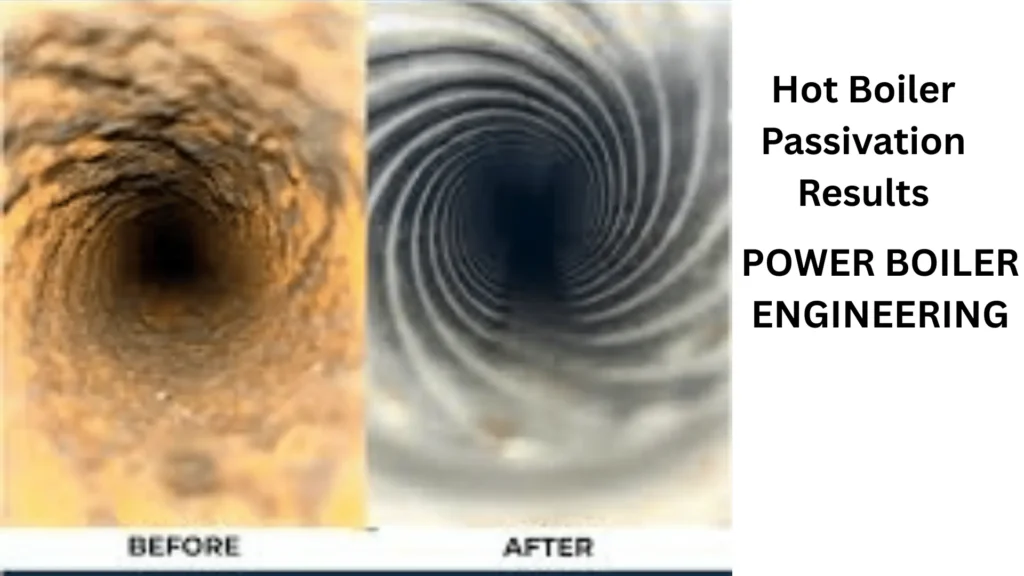
- Promotes formation of a dense, uniform magnetite (Fe₃O₄) protective layer on internal metal surfaces.
- Minimizes risk of oxygen corrosion and pitting during initial operation.
- Enhances boiler reliability and ensures smoother, safer start-up.
- Reduces metal loss and extends equipment service life.
- Improves water chemistry stability under operating conditions.
- Decreases maintenance requirements and risk of unplanned shutdowns.
- Provides better protection compared to cold methods for high- and medium-pressure boilers.
- Supports long-term operational efficiency and system integrity.
4. Chemicals Used for Boiler Passivation (Boiler Systems)
- Oxygen Scavengers (e.g., sodium sulfite, hydrazine, where permitted)
- Remove dissolved oxygen and promote formation of a stable magnetite layer.
- Alkalinity Builders (e.g., sodium hydroxide, ammonia)
- Maintain high pH (alkaline conditions) to support oxide layer stability and corrosion resistance.
- Phosphate Compounds (e.g., trisodium phosphate, disodium phosphate)
- Help control hardness, maintain buffering capacity, and assist in protective film formation.
- Conditioning Polymers (optional)
- Disperse residual impurities and prevent deposition during passivation.
- Filming Amines (in some programs)
- Form a thin hydrophobic barrier, enhancing surface protection.
- Neutralizing Amines (for condensate systems)
- Control pH in steam/condensate lines and reduce corrosion downstream.
Key Note
Hot passivation relies on controlled temperature, pH, and oxygen removal to form a uniform magnetite (Fe₃O₄) protective layer on internal boiler surfaces.
5. Method of Boiler Passivation (Boiler Systems)
- Pre-Cleaning and Inspection
- Ensure the boiler is mechanically and chemically cleaned.
- Remove oil, grease, mill scale, and debris to expose clean metal surfaces.
- System Filling
- Fill the boiler with demineralized or treated water to avoid introducing impurities.
- Eliminate air pockets by proper venting.
- Chemical Dosing
- Add oxygen scavengers (e.g., sodium sulfite or approved alternatives).
- Dose alkalinity builders (caustic soda/ammonia) to maintain pH ~9.5–11 (as per design).
- Add phosphates if required for buffering and conditioning.
- Heating and Circulation
- Gradually raise temperature to 80–120°C using auxiliary firing or external heating.
- Maintain circulation through pumps to ensure uniform temperature and chemical distribution.
- Passivation Stage
- Maintain elevated temperature and alkaline conditions for a defined period (typically 12–24 hours).
- Ensure dissolved oxygen remains near zero to promote formation of a stable magnetite (Fe₃O₄) layer.
- Monitoring and Control
- Continuously monitor pH, temperature, pressure, and chemical residuals.
- Adjust dosing as required to maintain stable conditions.
- Cooling and Stabilization
- After completion, allow the system to cool gradually under protected conditions.
- Avoid sudden exposure to air to prevent flash corrosion.
- Final Preparation
- Keep the boiler either in hot standby or shift to appropriate preservation method (hot or cold lay-up).
- Record parameters and confirm passivation effectiveness before operation.
Conclusion – Boiler Passivation
Boiler passivation is a critical procedure for protecting boiler internals, particularly in high- and medium-pressure systems. Maintaining elevated temperature, alkaline conditions, and oxygen-free water, it enables the formation of a stable magnetite protective layer on metal surfaces. This significantly reduces the risk of corrosion, pitting, and premature equipment failure.
When properly executed and monitored, hot passivation ensures reliable start-up, enhances operational efficiency, and extends boiler service life. It is a preferred method for systems requiring quick return to service and high integrity under demanding operating conditions.