

Fire Extinguisher classes
Fire extinguishers are classified according to the type of fire they are designed to control. The standard fire extinguisher classes are:
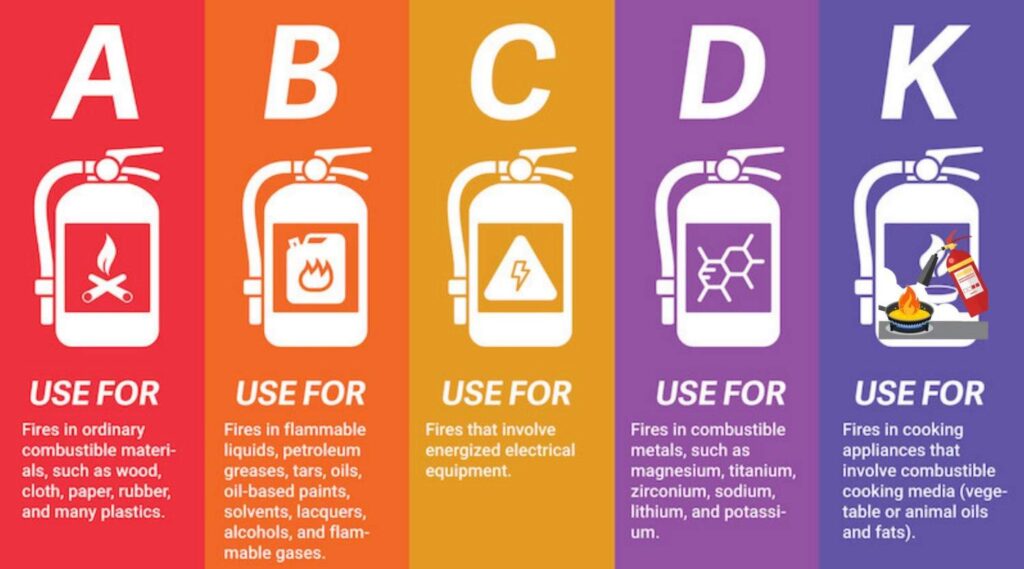
Fire extinguishers are classified according to the type of fire they are designed to control:
Type A – Class A Fires (Ordinary Combustibles)
Used for fires involving wood, paper, cloth, rubber, and plastics. Common extinguishers include Water, Foam, and ABC Dry Powder.
Type B – Class B Fires (Flammable Liquids)
Applicable to fires involving petrol, diesel, oil, solvents, and paints. Foam, CO₂, and Dry Powder extinguishers are suitable.
Type C – Class C Fires (Flammable Gases / Electrical)
Used for fires involving flammable gases such as LPG, propane, and butane, and energized electrical equipment. Dry Powder and CO₂ extinguishers are recommended.
Type D – Class D Fires (Combustible Metals)
Used for fires involving metals such as magnesium, sodium, potassium, and aluminum powder. Special Class D Dry Powder extinguishers are required.
Type K – Class K Fires (Cooking Oils and Fats)
Designed for fires involving vegetable oils and animal fats in commercial kitchens. Wet Chemical extinguishers are used.
If you need this summarized for safety training, compliance documentation, or inspection checklists, I can refine it further.
Different Types Of Fires
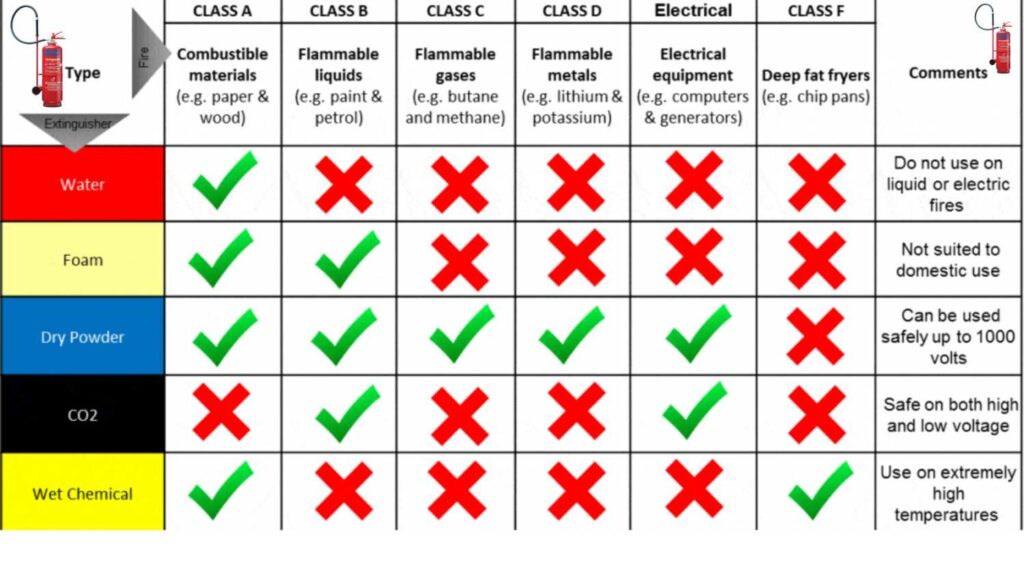
Fires are classified based on the type of fuel involved. The standard fire classes are outlined below:
Class A – Ordinary Combustibles
Fires involving solid materials such as wood, paper, cloth, rubber, and plastics.
Class B – Flammable Liquids
Fires involving flammable or combustible liquids, including petrol, diesel, oils, paints, solvents, and grease.
Class C – Flammable Gases
Fires involving flammable gases such as LPG, propane, butane, methane, and acetylene.
Class D – Combustible Metals
Fires involving combustible metals like magnesium, sodium, potassium, aluminium powder, and titanium.
Class E – Electrical Fires
Fires involving energized electrical equipment such as panels, wiring, motors, and transformers.
Class F – Cooking Oils and Fats
Fires involving cooking oils and fats are commonly found in commercial kitchens and food processing areas.
Each fire class requires a specific type of fire extinguisher for safe and effective firefighting.
Class A – Ordinary Combustibles
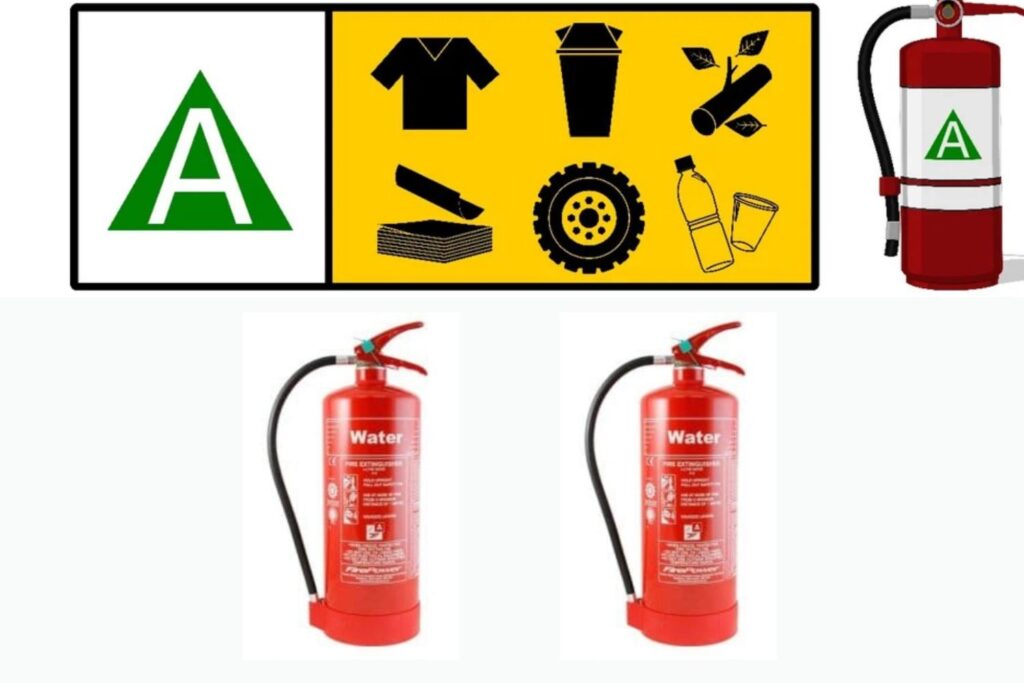
Class A fires involve solid, combustible materials of an organic nature. These materials typically burn with glowing embers and leave ash after combustion.
Common materials involved:
Wood
Paper and cardboard
Cloth and textiles
Rubber
Plastics
Suitable fire extinguishers:
Water fire extinguishers
Foam (AFFF) extinguishers
ABC dry powder extinguishers
Extinguishing method:
Class A fires are best controlled by cooling the burning material below its ignition temperature, most commonly using water.
Typical locations:
Offices
Homes
Schools
Warehouses
General storage areas
Using the correct extinguisher is essential to prevent fire spread and ensure safe firefighting operations.
Class B – Flammable Liquids
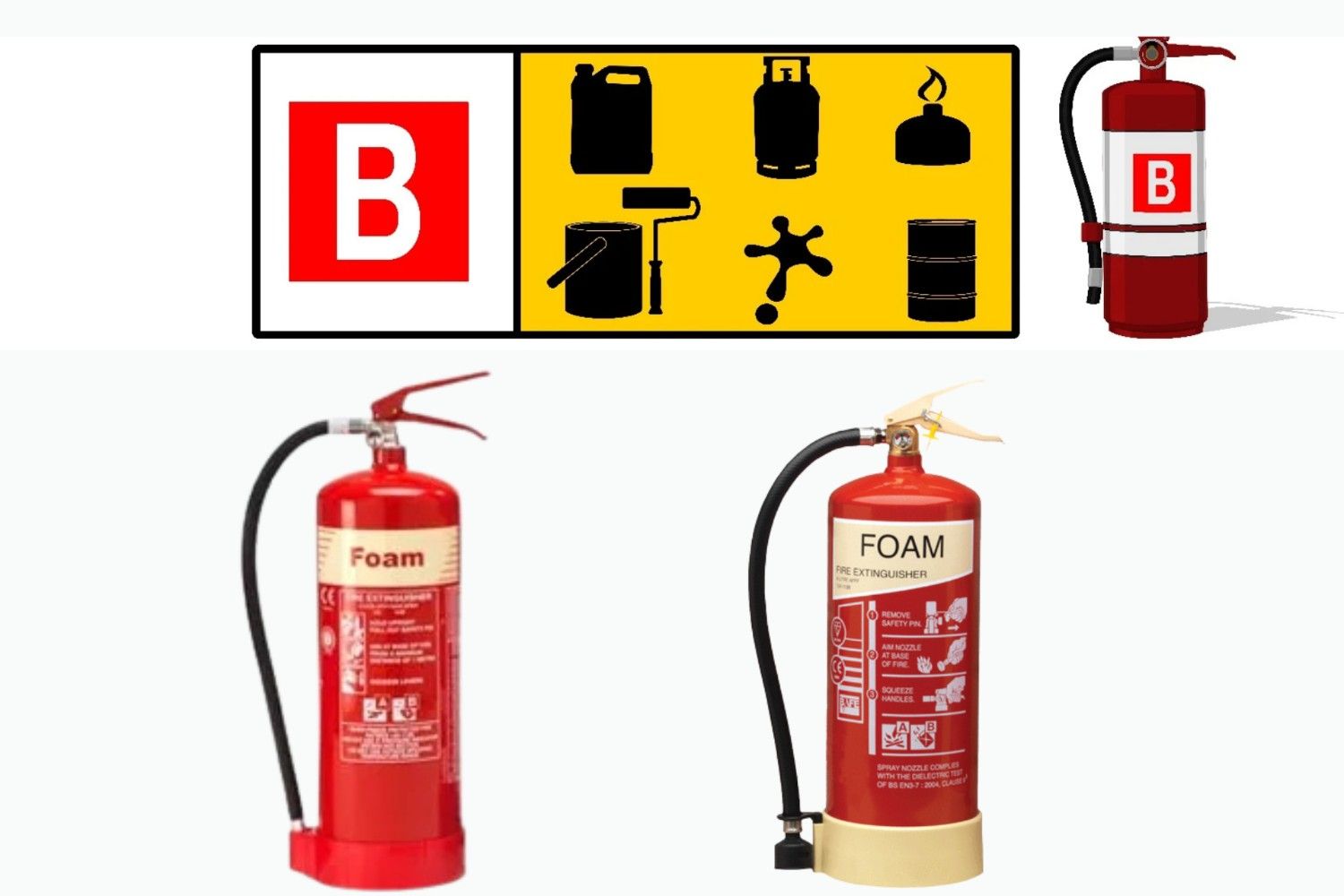
Class B fires involve flammable or combustible liquids that burn on the surface when exposed to heat or ignition sources.
Common materials involved:
Petrol and diesel
Oils and lubricants
Paints and varnishes
Solvents
Alcohols and grease
Suitable fire extinguishers:
Foam (AFFF) fire extinguishers
CO₂ fire extinguishers
ABC or BC dry powder extinguishers
Extinguishing method:
Class B fires are controlled by smothering the fire to cut off oxygen or by interrupting the chemical reaction of the flame.
Typical locations:
Fuel storage areas
Workshops and garages
Chemical plants
Paint stores
Industrial and commercial facilities
Water should not be used on Class B fires, as it can spread the burning liquid and worsen the fire.
Class C – Flammable Gases
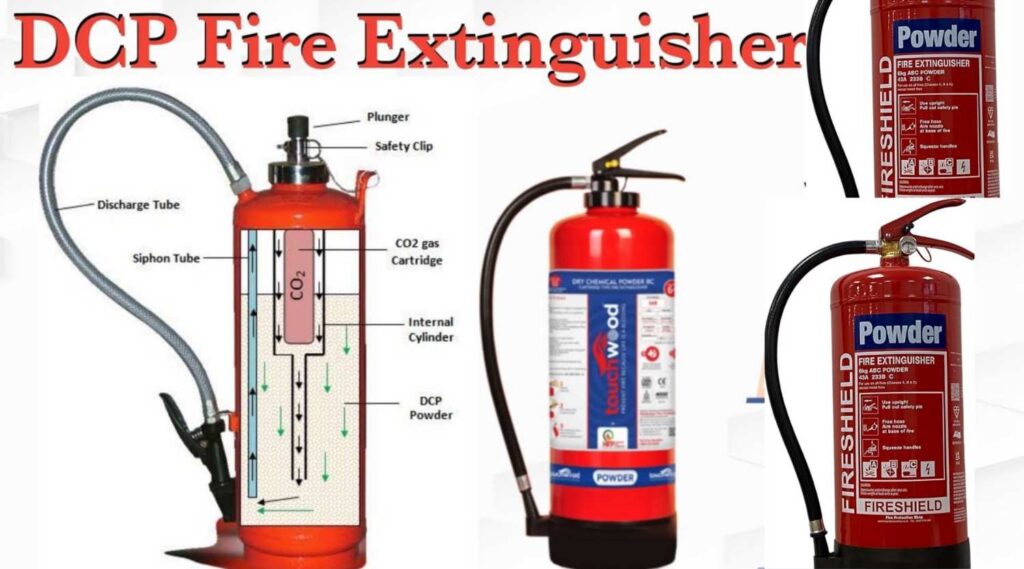
Class C fires involve the ignition of flammable gases released into the air. These fires are highly dangerous due to rapid flame spread and the risk of explosion.
Common flammable gases:
LPG (Liquefied Petroleum Gas)
Propane
Butane
Methane
Natural gas
Acetylene
Recommended fire extinguishers:
Dry powder (ABC or BC) fire extinguishers
Firefighting principle:
The safest and most effective action is to immediately shut off the gas supply. Dry powder extinguishers may be used to temporarily extinguish flames while isolation is carried out.
Typical risk areas:
Gas cylinder storage rooms
Boiler houses
Industrial and manufacturing plants
Laboratories
Commercial kitchens
Other extinguishing agents are generally ineffective unless the gas flow is completely stopped.
Class D – Combustible Metals
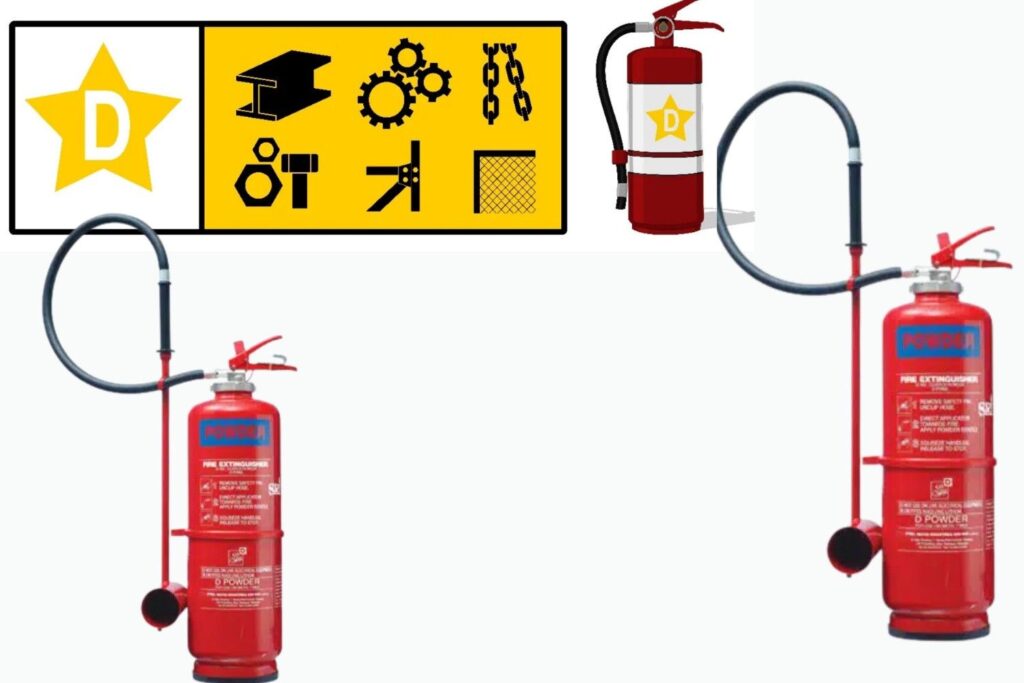
Class D fires involve combustible metals that burn at very high temperatures and react violently with water or standard extinguishing agents.
Common metals involved:
Magnesium
Sodium
Potassium
Aluminium powder
Titanium
Lithium
Suitable fire extinguishers:
Class D dry powder extinguishers (special metal powders)
Extinguishing method:
Class D fires are controlled by smothering the burning metal with a specially formulated dry powder that absorbs heat and isolates oxygen.
Typical locations:
Metal processing and machining areas
Foundries
Laboratories
Battery manufacturing facilities
Aerospace and automotive industries
Water, foam, CO₂, and standard dry powder extinguishers must never be used, as they can cause violent reactions and intensify the fire.
Class E – Electrical Fires
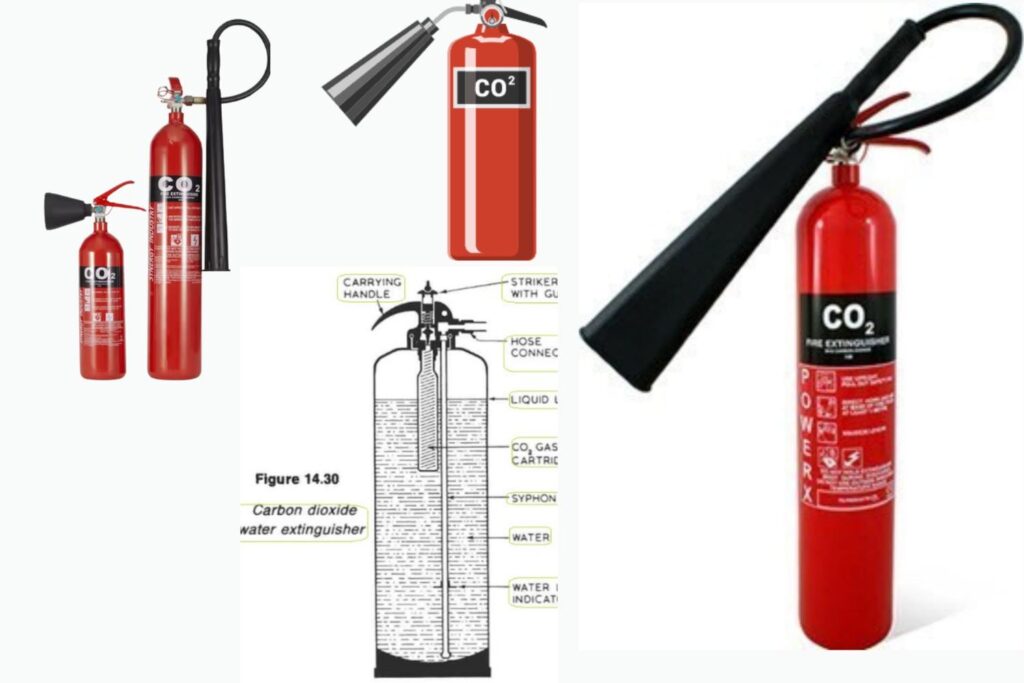
Class E fires involve energized electrical equipment where electricity is actively present, creating shock and ignition hazards.
Common sources involved:
Electrical panels and switchboards
Wiring and cable systems
Motors and generators
Transformers
Computers and office equipment
Suitable fire extinguishers:
CO₂ (Carbon Dioxide) fire extinguishers
Dry powder (ABC) fire extinguishers
Extinguishing method:
Electrical fires are controlled by discharging a non-conductive extinguishing agent to eliminate fire without conducting electricity. Power should be isolated as soon as it is safe to do so.
Typical locations:
Electrical rooms
Offices and data centers
Industrial plants
Control rooms
Workshops
Water and foam must not be used on live electrical fires due to the risk of electric shock.
Class F – Cooking Oils and Fats
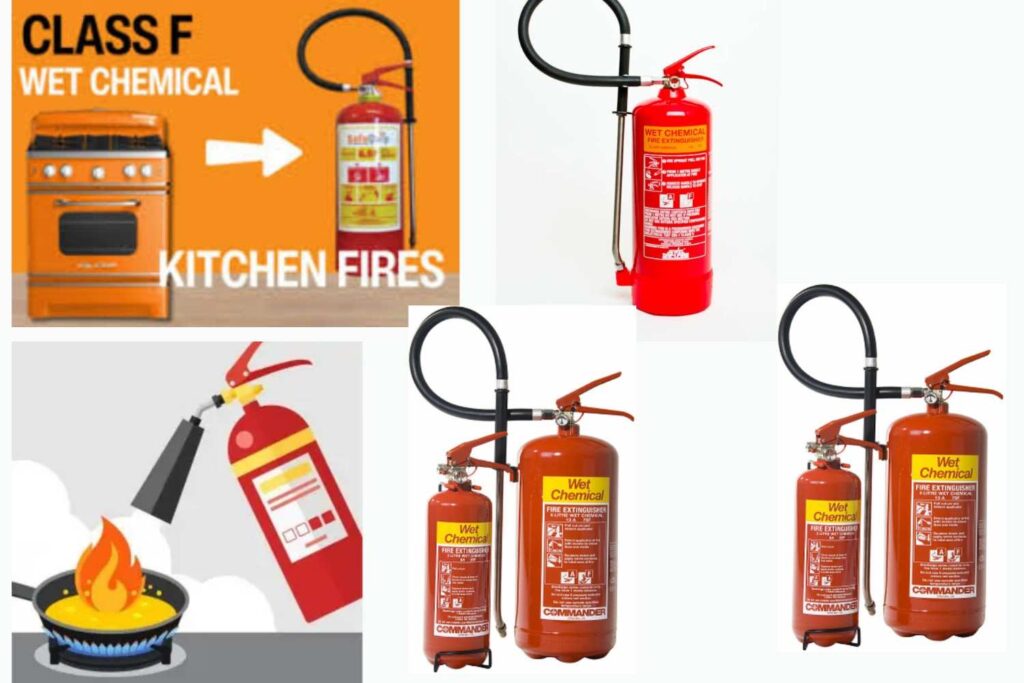
Class F fires involve high-temperature cooking oils and fats that can ignite and burn intensely, particularly in commercial cooking environments.
Common materials involved:
Vegetable oils
Animal fats
Deep-fat frying oils
Cooking grease
Suitable fire extinguishers:
Wet chemical fire extinguishers
Extinguishing method:
Wet chemical agents react with hot oils and fats to form a soapy layer through saponification. This cools the fire and seals the surface, preventing re-ignition.
Typical locations:
Commercial kitchens
Restaurants and hotels
Canteens and cafeterias
Food processing facilities
Water, foam, CO₂, and dry powder extinguishers must not be used, as they can cause fire spread, flare-ups, or violent reactions.
Conclusion
Understanding fire classes and the correct use of fire extinguishers is essential for effective fire prevention and emergency response. Each class of fire—A, B, C, D, E, and F—involves different materials and hazards, requiring specifically designed extinguishing agents. Using the wrong type of extinguisher can worsen the fire and place lives at risk. Proper selection, correct placement, regular maintenance, and adequate training ensure fire extinguishers perform effectively when needed. A well-informed approach to fire safety not only protects people and property but also supports compliance with safety regulations and best practices in workplaces and public areas.